

Honu Hotspot Investigation in Maunalua Bay
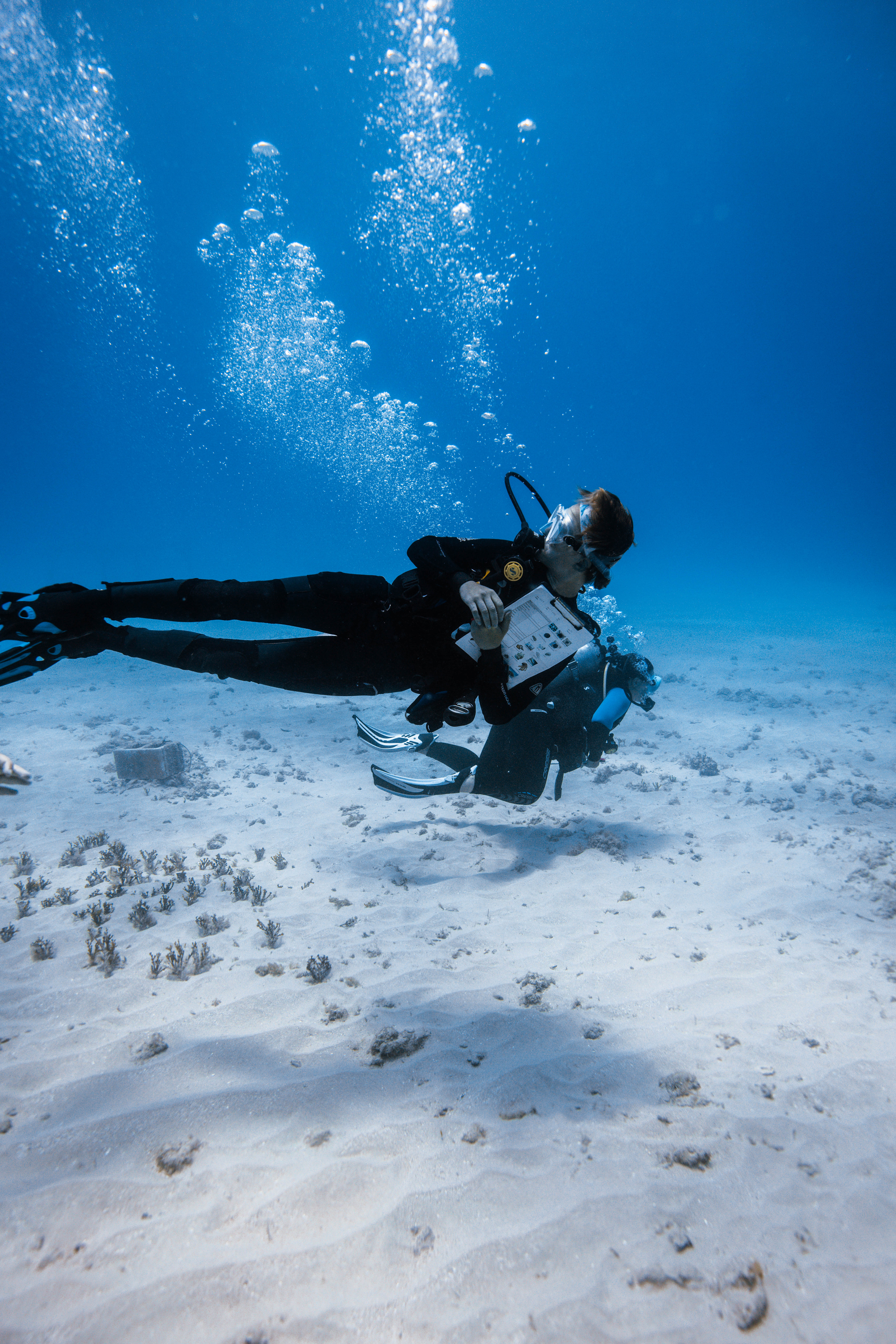
This month, our Coral Reef Conservationists, Courtney Thompson and Paige Landis, dove into Maunalua Bay’s Koko Crater dive site to monitor coral cover and use advance photogrammetry tools for long-term reef monitoring. Their hands-on fieldwork directly advances our mission by combining scientific precision with active, community-driven conservation.
Ocean Alliance Project & coral conservation
We transform tourism into action. Our coral conservation program model invites visitors, kamaʻāina, and interns to actively restore, monitor, and protect coral reef ecosystems rather than passively observe them.
Through immersive programs like the Sea Turtle Conservationist Experience, Coral Reef Ecology and Monitoring Excursion, and our multi-week Marine Research Internship, participants engage directly with the reefs, rolling up their sleeves to conduct real ecological work.

This includes hands-on skills like photogrammetry mapping, turtle identification, and fish and benthic invertebrate surveys all contributing to long-term reef resilience and restoration. These efforts generate critical data for conservation while offering participants a meaningful, science-based relationship with our reefs.
At Koko Crater, coral conservation takes the form of targeted coral monitoring, behavioral observation of honu at cleaning stations, and the production of high-resolution orthomosaics to track coral colony changes over time. Here, science and tourism meet in service of reef recovery.
Koko Crater dive site
Koko Crater is a shallow reef site in Maunalua Bay, typically ranging from 10 to 13 meters deep with visibility often exceeding 20 meters. It’s a flat, sandy-bottomed dive site scattered with natural craters and undercut ledges that provide resting areas for honu, making it a very popular site for scuba divers and snorkelers alike.
This site is known for its reliable turtle encounters and active cleaning stations. While coral cover is relatively sparse, the consistent topography and abundance of marine life make it an ideal location for photogrammetric mapping, behavioral observation, and long-term ecological monitoring.
Koko Crater plays a key role in our coral conservation and regenerative tourism models by offering an accessible, species-rich site where conservation divers can collect real data and contribute meaningfully to reef stewardship.
Honu cleaning stations at Koko Crater
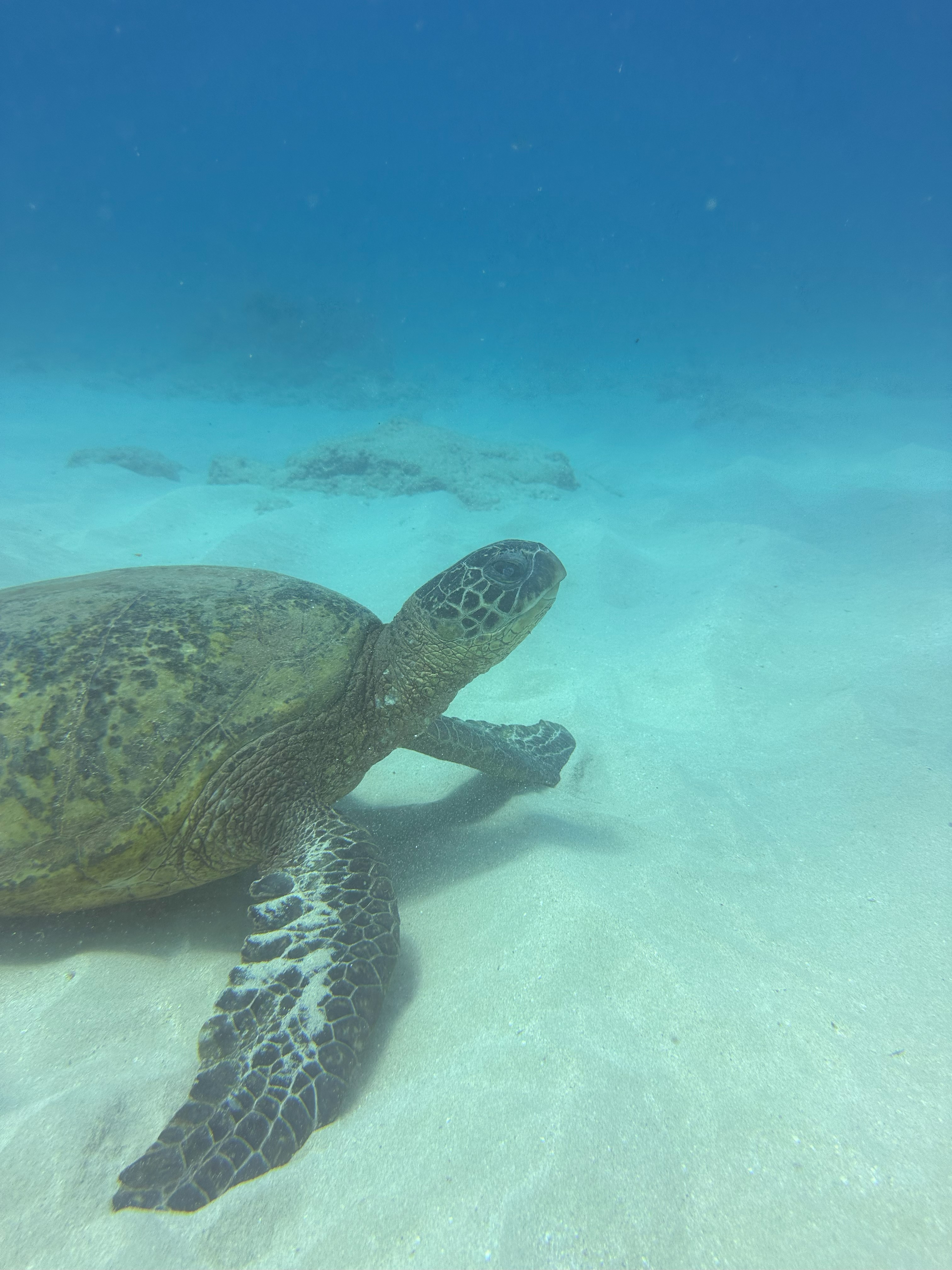
Koko Crater is known for its consistent honu presence. These natural cleaning zones form in undercut ledges and sandy depressions, where fish such as Kole, Hawaiian Dascyllus, lauʻīpala, and certain butterflyfish remove algae, parasites, and dead skin from honu shells and flippers.
The behavior is highly ritualized. Honu will often return to the same ledge, hover still while being cleaned, and then drift away slowly, allowing another to take their place. Their stations have been known to exist in the same places for hundreds of years or longer. These predictable interactions create natural “behavioral anchors” on the reef: ideal fixed points for long-term ecological observation and photogrammetric monitoring.

For us, these cleaning stations offer more than just an exciting spectacle. They serve as repeatable, high-activity zones where we can collect time-series imagery, monitor honu health and behavior, and study how fish-honu interactions may shape coral presence, algal cover, and reef resilience over time. Because honu return to the same cleaning stations across months and years, these zones offer rare consistency in an otherwise highly dynamic reef environment. This makes them key to both scientific understanding and conservation engagement.
Photogrammetry as a tool to track coral coverage
Photogrammetry is a mapping technique that uses overlapping photographs to create accurate, scaled models of real-world environments. It’s essentially the process of turning hundreds of 2D photos into a single 3D-scaled model or top-down reef map.
Underwater, this involves divers swimming transects with a high-definition camera, capturing images of the reef from consistent heights and angles on a timer. These images are then stitched together using software like Metashape to generate high-resolution orthomosaics.
At Koko Crater, we apply this process to document coral colonies at centimeter-scale precision. We repeat this process at regular intervals, every 3 to 6 months, to capture snapshots of coral coverage over time. Once orthomosaics are rendered, we import them into TagLab, where each coral genet is manually labeled, classified by genus, and measured for area and perimeter. These maps serve as the foundation for deeper analyses, including long-term comparisons and change detection.
This workflow allows us to track ecological change with centimeter-level accuracy and to detect patterns in coral dynamics, such as whether colonies expand near high fish activity zones like honu cleaning stations.

To visualize our mapping process, the image above shows a completed orthomosaic of the Koko Crater South reef, created from diver-captured imagery and annotated in TagLab. Each colored polygon represents a single coral colony, digitally outlined and classified by genus to extract precise measurements of area, perimeter, and spatial arrangement. Color coding highlights different coral types: Pocillopora (pink), Porites (blue), Montipora (green), and Pavona (yellow). Together, these annotated mosaics form the foundation for our long-term coral cover monitoring and spatial analysis.
These annotated maps are not just stored locally but uploaded to our open-access reef model library, contributing to a growing public dataset that supports research, education, and conservation across Hawaiʻi and beyond. When we share data, we grow stewardship. OAP’s reef models are open to anyone who wants to protect what they’ve come to know.
Correlation between cleaning station fish and coral coverage
At Koko Crater, photogrammetry data reveals that coral colonies, especially Porites, are often denser near active honu cleaning stations. These zones attract frequent fish traffic, e.g. cleaner wrasses, tangs, and surgeonfish, creating microhabitats of heightened ecological activity.
This concentration of reef fish may contribute to coral persistence in several ways: herbivorous fish reduce algal overgrowth, clearing space for coral settlement and reducing smothering and competition; cleaner fish and the honu themselves may enhance localized nutrient cycling through movement and excretion. Together, these effects can promote conditions favorable to coral growth.

While causality can’t yet be confirmed, the spatial overlap between fish-cleaning zones and coral-rich areas suggests that behavioral hotspots, like cleaning these stations, may help structure reef benthic communities. These correlations, made visible through repeated orthomosaic surveys, point to the importance of mutualistic interactions in reef resilience and monitoring. It highlights the need to view coral ecosystems not as isolated organisms, but as networks of interdependent relationships. This systems-based perspective echoes our mission: to foster regenerative approaches grounded in ecological connection, not extraction. Recognizing these interactions is essential for understanding reef dynamics, guiding restoration efforts, and ensuring that every action we take in the water supports the broader health of the reef.
3D models
3D models allow us to observe coral reefs in their full spatial complexity, offering perspectives that go far beyond flat, 2D maps. By stitching hundreds of overlapping images into a digital rendering, we can recreate reef structures with remarkable detail, allowing for a more immersive understanding of coral colonies, fish-habitat interactions, and topographic features like ledges and cleaning stations.
These models are more than just scientific tools: they’re visual bridges between data and storytelling. We use 3D renderings to study coral morphology, spatial relationships between species, and physical degradation over time. They also help us communicate our work to a broader audience, giving students, divers, and researchers a chance to virtually explore the reef as if swimming through it themselves.
This aligns with our goal to make reef monitoring accessible and engaging. A 3D model doesn’t just show what’s there, but how it lives and breathes in space.
The above video shows a 3D model of the Koko Crater South honu cleaning station, generated from diver-collected imagery and rendered using photogrammetry software. These models allow us to observe reef features in spatial context, enhancing both scientific analysis and public understanding.
Data retrieved

The histogram above shows colony size distribution for four coral genera identified in the Koko Crater South orthomosaic: Pocillopora (pink), Porites (blue), Montipora (green), and Pavona (yellow). Each bar represents the number of colonies within a given area range (cm²), allowing us to visualize not just total cover but also the size structure of the coral community.
The reef is dominated by Porites, which makes up over 35% of total cover and is most abundant in the smallest size class (under 100 cm²), indicating a high density of small, potentially younger colonies. Pocillopora also shows strong representation, with a broader size distribution and several colonies exceeding 300 cm². Montipora and Pavona contribute less overall cover, but are still present in multiple size classes.
This colony size structure provides insight into the current demographic makeup of the reef, which is an essential baseline for tracking growth, mortality, and recruitment in future surveys. When paired with spatial data from the orthomosaic, it helps us interpret how coral communities are structured across Koko Crater’s benthic landscape and how they may respond to environmental change over time.
Combined with previous observations of honu cleaning behavior and high fish traffic zones, this data adds another layer to our understanding of reef ecosystems. It links coral population dynamics to the ecological interactions that surround them. These cross-species connections reinforce our systems-based approach.
Why is it important
We are committed to protecting and preserving Hawaiʻi’s marine biodiversity through community-led ecological monitoring and regenerative tourism, a mission rooted in data-driven stewardship and ecosystem-wide care.
By developing standardized long-term datasets using the Ecological Monitoring Program and photogrammetry, we provide reliable, high-resolution insights into how coral reefs change over time.
- Visual Baselines: Orthomosaics and size-frequency histograms offer a clear, measurable visual baseline of coral structure, composition, and colony demographics.
- Temporal Insight: By performing repeat photogrammetry surveys every 3–6 months, changes in coral cover, from growth and recruitment to bleaching or disease, can be tracked and quantified scientifically.
- Ecosystem Context: Mapping coral alongside fish and honu activity reveals how mutualisms and spatial patterns influence reef health.
- Conservation Action: These data guide restoration strategies, identify priority areas, and help focus limited conservation resources where they’ll matter most.
- Scientific Launchpad: This work establishes the baseline understanding future research depends on which enables more targeted studies on coral growth rates, fish–coral interactions, and environmental change.
- Scalable Citizen Science: By training divers, interns, coral conservationists and regenerative tourism participants in these methods, we make coral monitoring accessible, replicable, and scalable built on the belief that everyone has a role to play in reef stewardship.
How to get involved
Whether you’re a local resident, diver, student, or tourist, there are many ways to get involved with reef conservation with us.
- Join a 1- or 4-Day Ecological Monitoring Program (EMP): These hands-on snorkel-or-scuba-based programs train participants in photogrammetry, fish diversity assessments, invertebrate surveys, and substrate composition & health; equipping you with the tools to collect real data and contribute to ongoing monitoring efforts. Perfect for visitors, those at varying experience levels, and those wanting to make a big impact in a short time.
- Apply for a Marine Research Internship: We offer immersive 6-and-8-week internships for students, aspiring scientists, and conservationists. Interns contribute directly to long-term photogrammetry projects, coral health tracking, reef restoration effors, and more. Details and application info are available under the ‘Internships’ tab
- Support the Work: Donations help OAP provide training, equipment, and dive access to local students, kamaʻāina researchers, and community scientists. Every contribution goes directly toward reef protection and the development of open-access ecological datasets. You can donate here.

For us, conservation is participatory, regenerative, and rooted in data. By getting involved, you don’t just learn about our reefs, you help protect them.

Leave a Reply