


At Ocean Alliance Project, we believe that protecting Hawai‘i’s coral reefs starts with empowering people to take part in the process. Recently, we had the pleasure of hosting Krisztian Simon for our 1-Day Coral Reef Conservation Program, where he contributed directly to meaningful reef monitoring work at one of O‘ahu’s treasured underwater sites: Horseshoe Reef.
Horseshoe Reef: A Biodiversity Hotspot
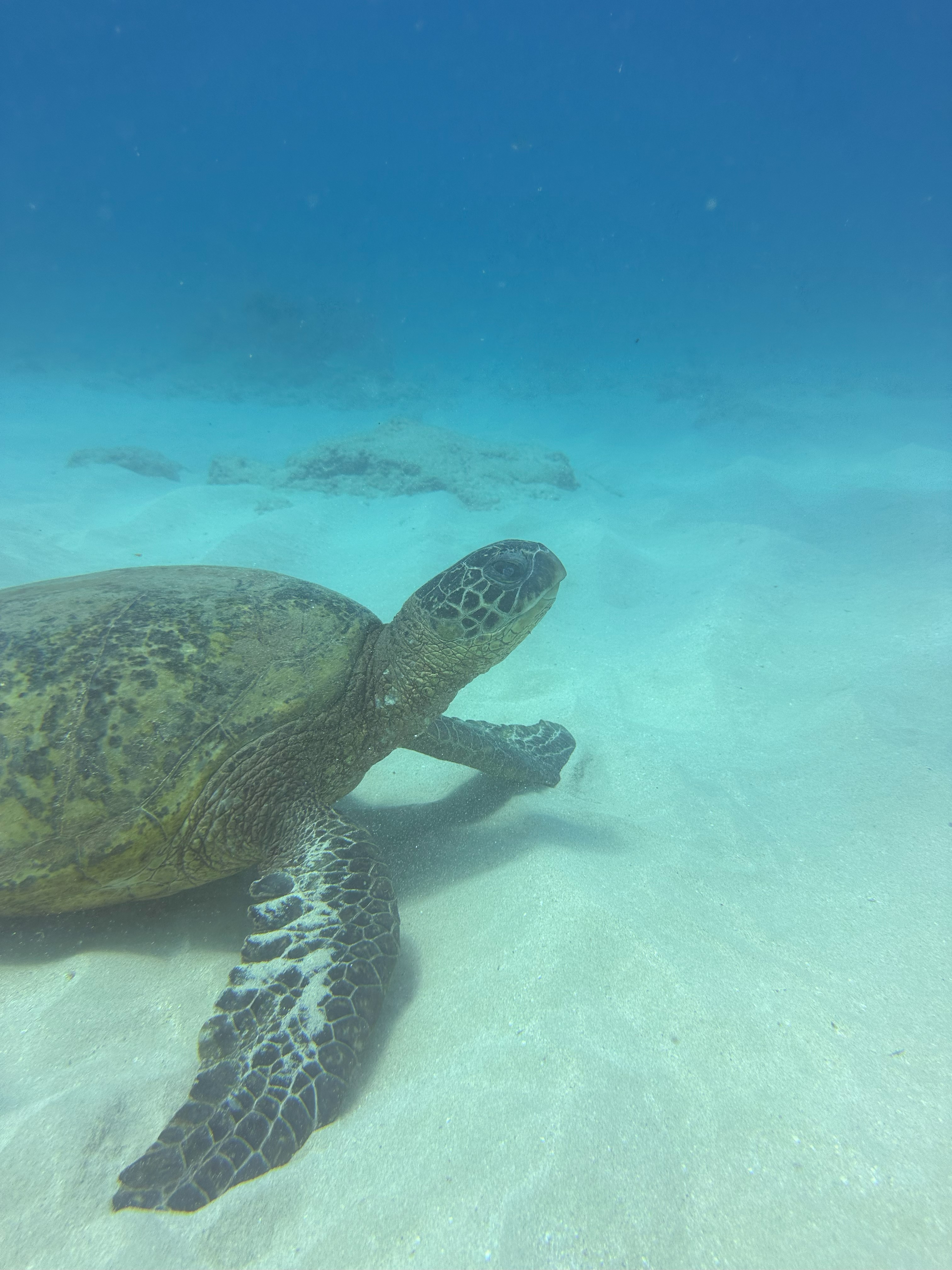
Located just off the southern coast of O‘ahu, Horseshoe Reef is a stunning stretch of coral habitat shaped like a horseshoe, providing shelter for a wide variety of marine life. As we descended into the clear blue waters, we were greeted by vibrant schools of kole (goldring surgeonfish), curious uhu (parrotfish), and the occasional kala (unicornfish) grazing along the reef. Green sea turtles (honu) are often spotted cruising between coral heads, and it’s not uncommon to glimpse larger predators like omilu (bluefin trevally) hunting along the reef’s edges.
Horseshoe Reef’s rich biodiversity makes it not just a beautiful dive site—it’s a critical location for conservation research. Its dynamic ecosystem offers a valuable window into how coral reefs across Hawai‘i are adapting—or struggling—in the face of environmental changes.


A Hands-On Day of Coral Conservation
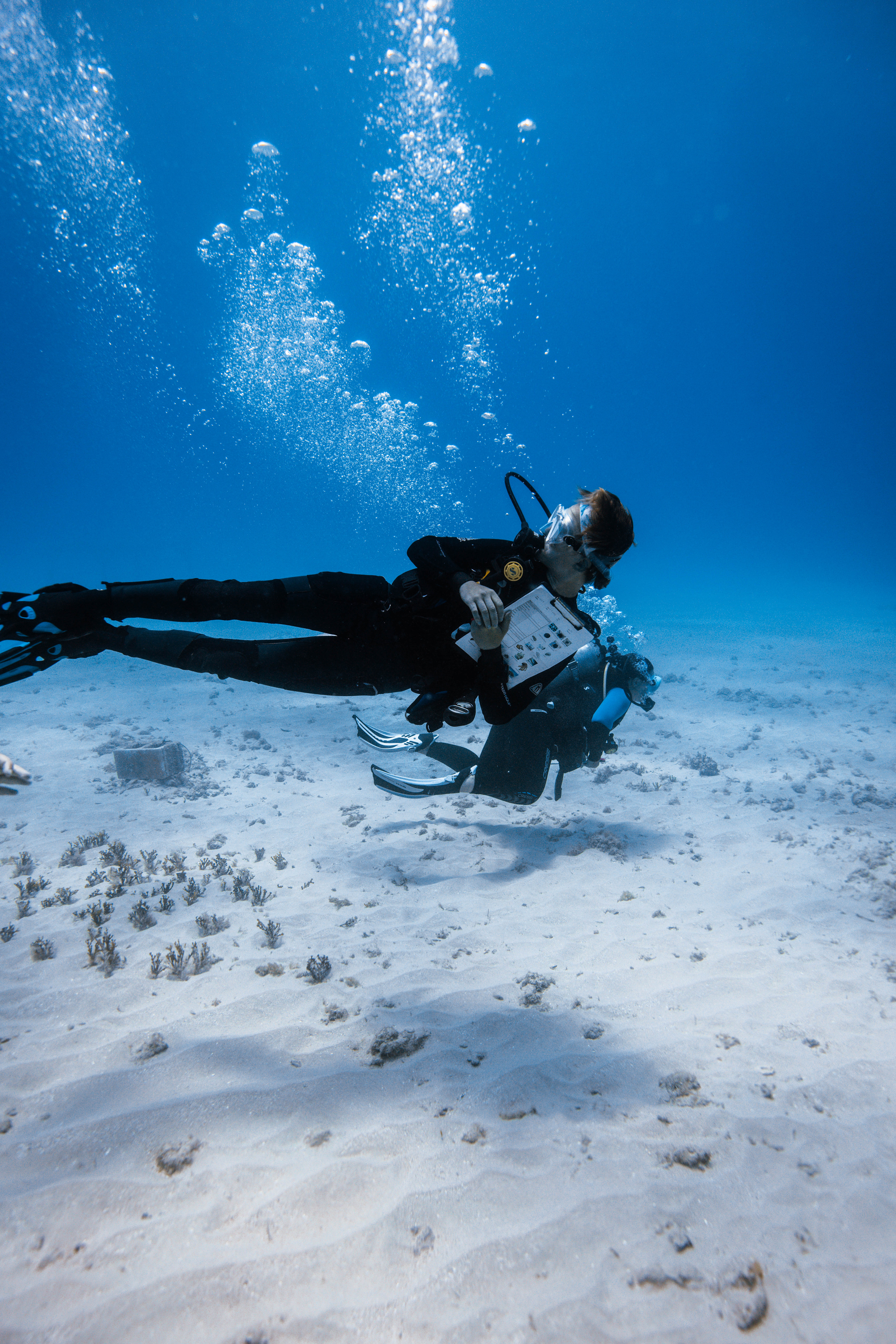
During his day with us, Krisztian participated in a full photogrammetry survey of Shallow Horseshoe West. Together, we established a 30×2 meter monitoring plot, placed scale bars, and captured over 700 high-resolution images. These images were later processed using structure-from-motion techniques to create a detailed 3D model and orthomosaic of the reef.
This model isn’t just for show—it’s a powerful tool that allows us to track the spread of coral diseases like white syndrome, a growing threat to reef health in Hawai‘i. By capturing the reef in such fine detail, we can return to the same site in the future and detect even subtle changes in coral coverage, disease prevalence, and habitat structure.
Why Coral Disease Monitoring Matters
Coral reefs are often called the “rainforests of the sea,” supporting a quarter of all marine life. But just like tropical forests, they are vulnerable. Diseases such as white syndrome can decimate coral populations rapidly if not monitored and managed. Early detection through programs like ours is critical for informing restoration efforts, protecting biodiversity, and sustaining the reefs that provide shoreline protection, cultural resources, and food security for Hawai‘i.


Regenerative Tourism in Action
Krisztian’s day with us is a perfect example of regenerative tourism—an approach that goes beyond “leaving no trace” to actively improving the places we visit. Participants in our Coral Reef Conservation Programs aren’t just observers; they become citizen scientists, helping to collect real-world data that informs conservation efforts statewide.
Through regenerative tourism, we aim to create a stronger connection between visitors and Hawai‘i’s marine ecosystems, while also advancing tangible outcomes for reef protection.
Mahalo, Krisztian!
We extend a heartfelt mahalo to Krisztian for his enthusiasm, hard work, and commitment to conservation. His contribution will play a direct role in helping us understand and protect the fragile ecosystems of Horseshoe Reef.
Interested in making a difference on your next trip to Hawai‘i?
🌊 Join one of our Coral Reef Conservation Programs and dive deeper into ocean stewardship.

Leave a Reply