

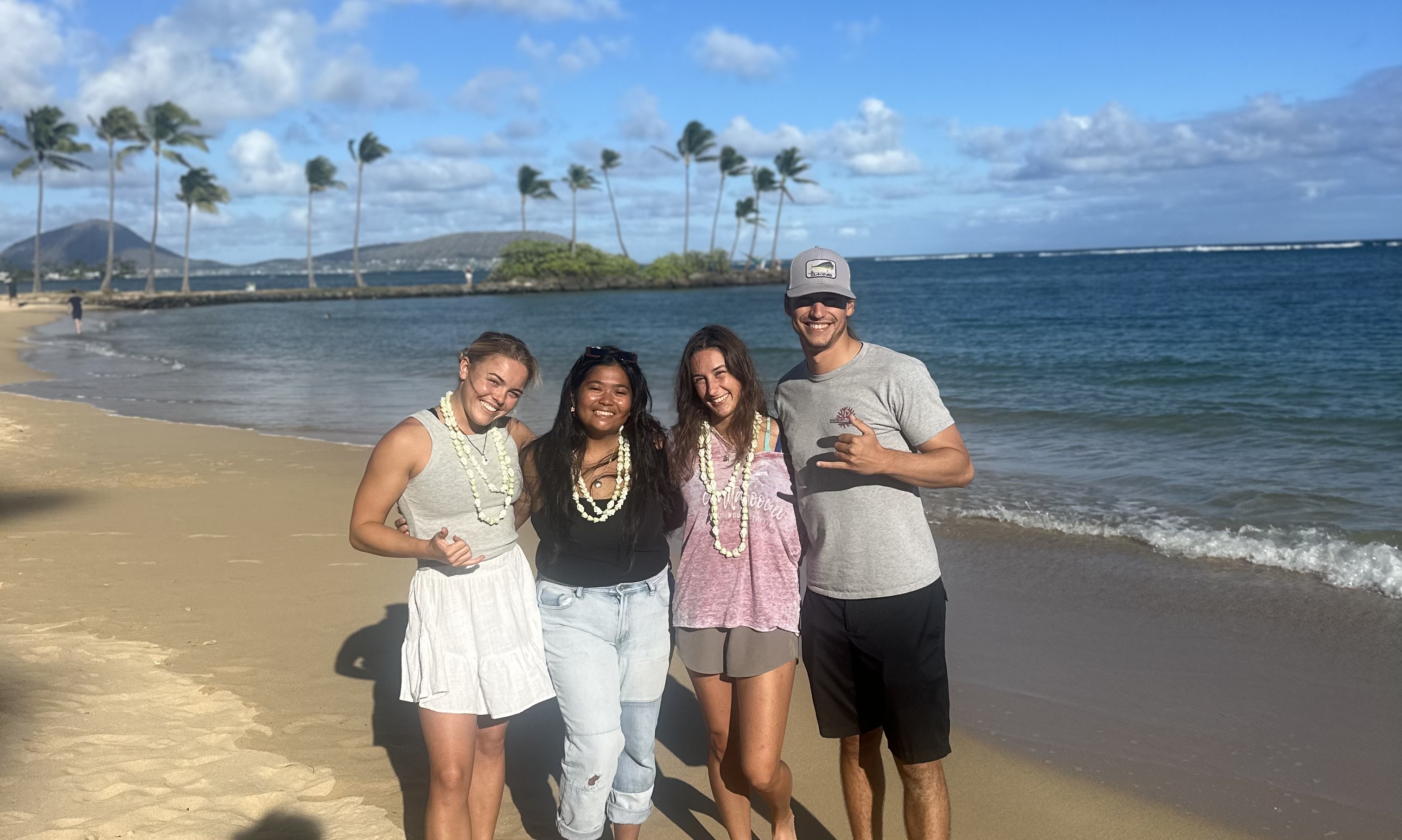
The final task for our 6 week Marine Research Interns is to develop an Independent Research Project. The project’s goal is to expand our long-term datasets on Oahu, not necessarily find definitive results in 6 weeks.
What is Ocean Alliance Project?
OAP is a 501c(3) nonprofit organization based in on Oahu, Hawaii. Our goal is to protect and preserve the marine biodiversity of Oahu, Hawaii. We do this through community based monitoring and regenerative tourism programs, like the six week Marine Research Internship.
What is the Ecological Monitoring Program?
The ecological monitoring program is a key component of the Six Week Marine Research Internship offered by OAP. The ecological monitoring program is a global monitoring technique, invented to data collection methods on our coral reefs. By creating standardised, longterm data sets we can paint a clear picture of how our reefs have changed over time. See our Ecological Monitoring Program (EMP) blog post for more information on how this works.
Choosing the Research Project
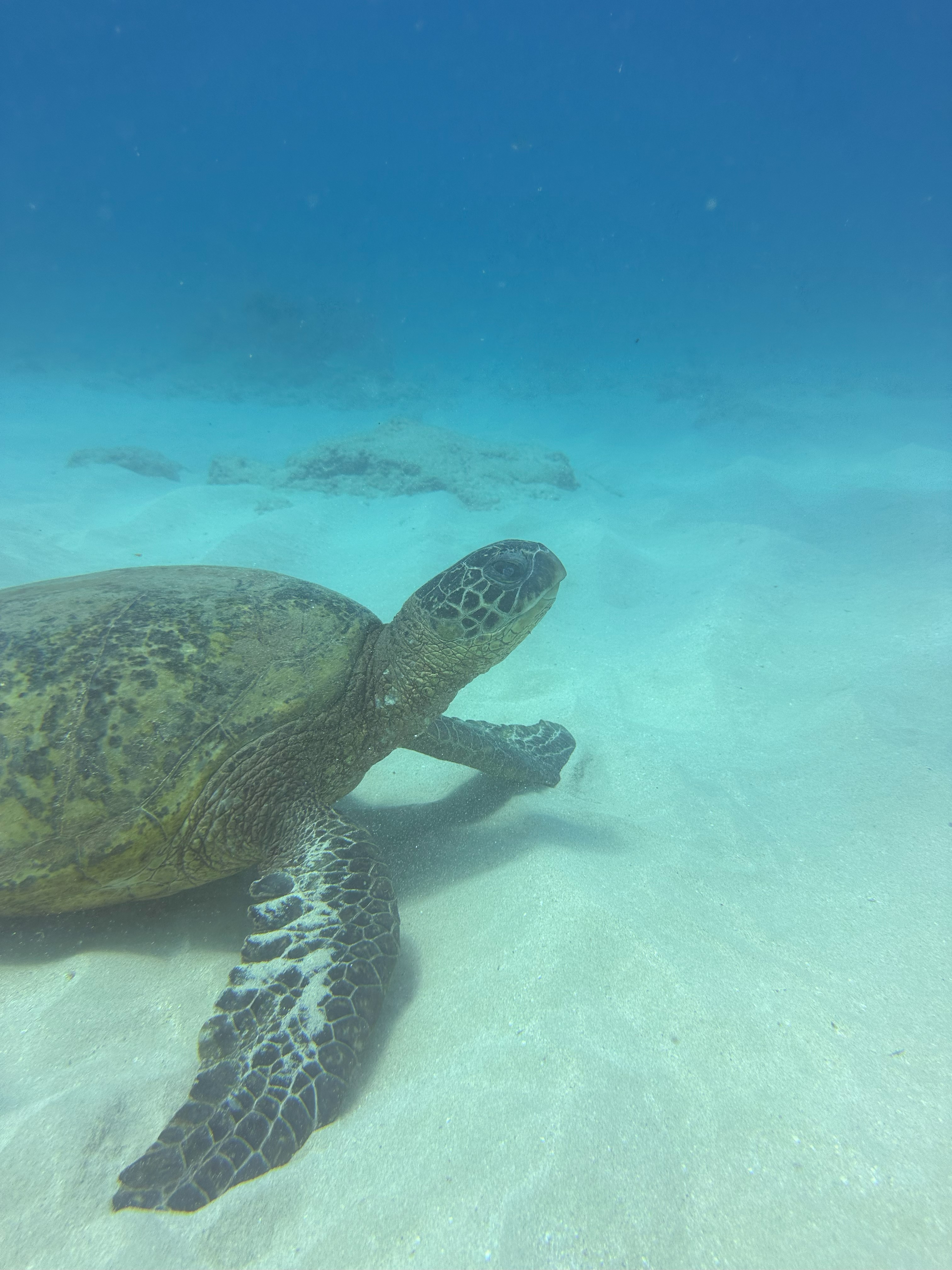
Over the course of their first three weeks of the internship, our interns undergo training dives involving EMP surveys, photogrammetry surveys, coral health and disease, sea turtle identification and coral restoration, as well as classroom presentations on each topic. Interns are then given the option to develop their own research question, aiming to collect data to answer it.

This cohort continued a previous project, studying coral health and disease on South Shore Oahu’s reefs using photogrammetry. The three of them decided to combine forces and tackle the project as a team.
The ultimate aim of this project was to establish a long term monitoring project to assess the feasibility of photogrammetry as a tool for measuring changes in the substrate composition of Maunalua Bay. Given the slow growth of these corals, interns hypothesized no changes in substrate composition would occur within a month. However, with further research to continue into the future, hopefully photogrammetry would be useful as a method for monitoring.
Collecting the Data

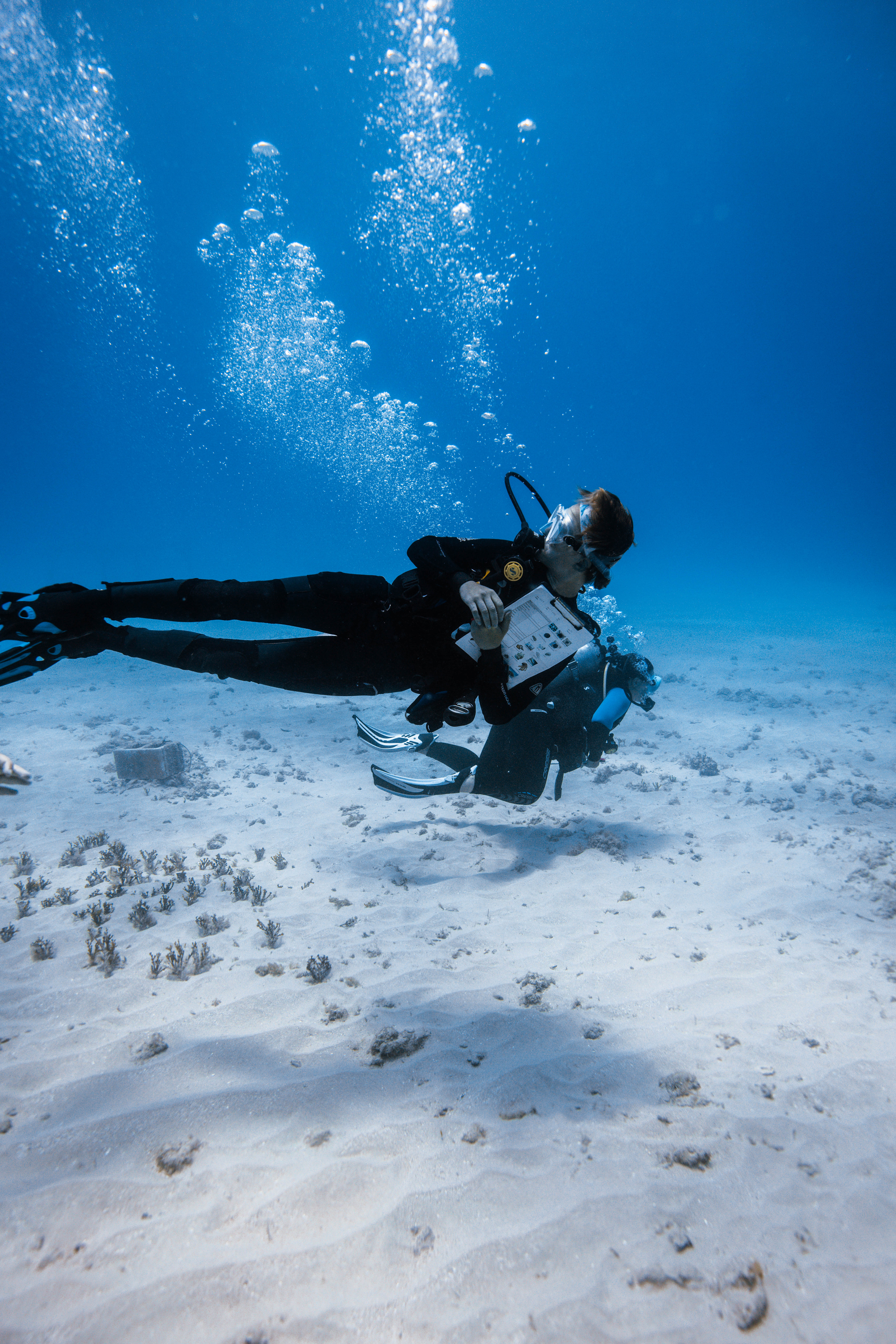
Photogrammetry surveys were conducted in the last two weeks of August, 2024. Plots were laid out in buddy teams on SCUBA. Diver one placed the four Ground Control Points (GCPs) and three scale bars, while diver two surfaced to record GPS coordinates for each GCP. Placement of GCPs was directed by 90 degree compass bearings and a 5 meter transect tape, to form a quadrilateral shape with GCP1 in the NE, GCP2 in the SE, GCP3 in the SW and GCP4 in the NW. Knowing the set distance between GCP’s and scale bars provides the model with a reference distance for more accurate scaling. Global Positioning System (GPS) coordinates were collected using Survey123 in situ, as a team member on the surface placed themselves precisely over each GCP. Assigning GPS coordinates to respective GCPs, along with bearing angles known due to set compass bearings, allows the model to georeference the reef zone within the context of real-world spatial analysis.
Diver one completed the photogrammetry survey, swimming a back and forth U-pattern consistently 1 meter above the highest point of reef within the plot on a North-South bearing then again on an East-West bearing. Photos were taken at one second intervals and swim pace was set to allow for at least 80% overlap between photos to ensure full coverage of reef zones. Photos were taken on a Sony A6400 camera using a Rokinon 12mm F/2.0 AF lens, with Sea Frog dome housing: Acrylic 6in dome port, to ensure sufficient quality for rendering. Camera settings were as follows: AE tracking sensitivity: high (for proper exposure), Silent shoot in interval: Off, Setting: manual mode, Shutter Speed: 1/320 sec, Aperture: F8, ISO: auto (sensitivity to light), and Image details: super fine. To capture white balance, a photo was taken of a white slate (without shadows) at a recorded depth. In cases where depth was <5m water, shutter speed was set to 1/640 sec.
Data Analysis
Photos were uploaded to a Macbook Pro and rendered using a Metashape script: https://github.com/Perry-Institute/Metashape_Reef. The Metashape Pro software is used on a series of photos taken over the set project zone, and reconstructs points from the 2D photographs into a 3D model. The workflow begins with uploading photos, for this study typically a series of 500-800 photos were used to compile a metashape project. Reconstruction begins by running a photo alignment step as it finds key points in order to build a distortion model. This uses the original photo size with no scaling adjustments. Stationary tie points are excluded to not create aggregates of the same points throughout the model. Building the mesh uses the source data to reconstruct the surface base of the model, in this instance it uses the depth maps.
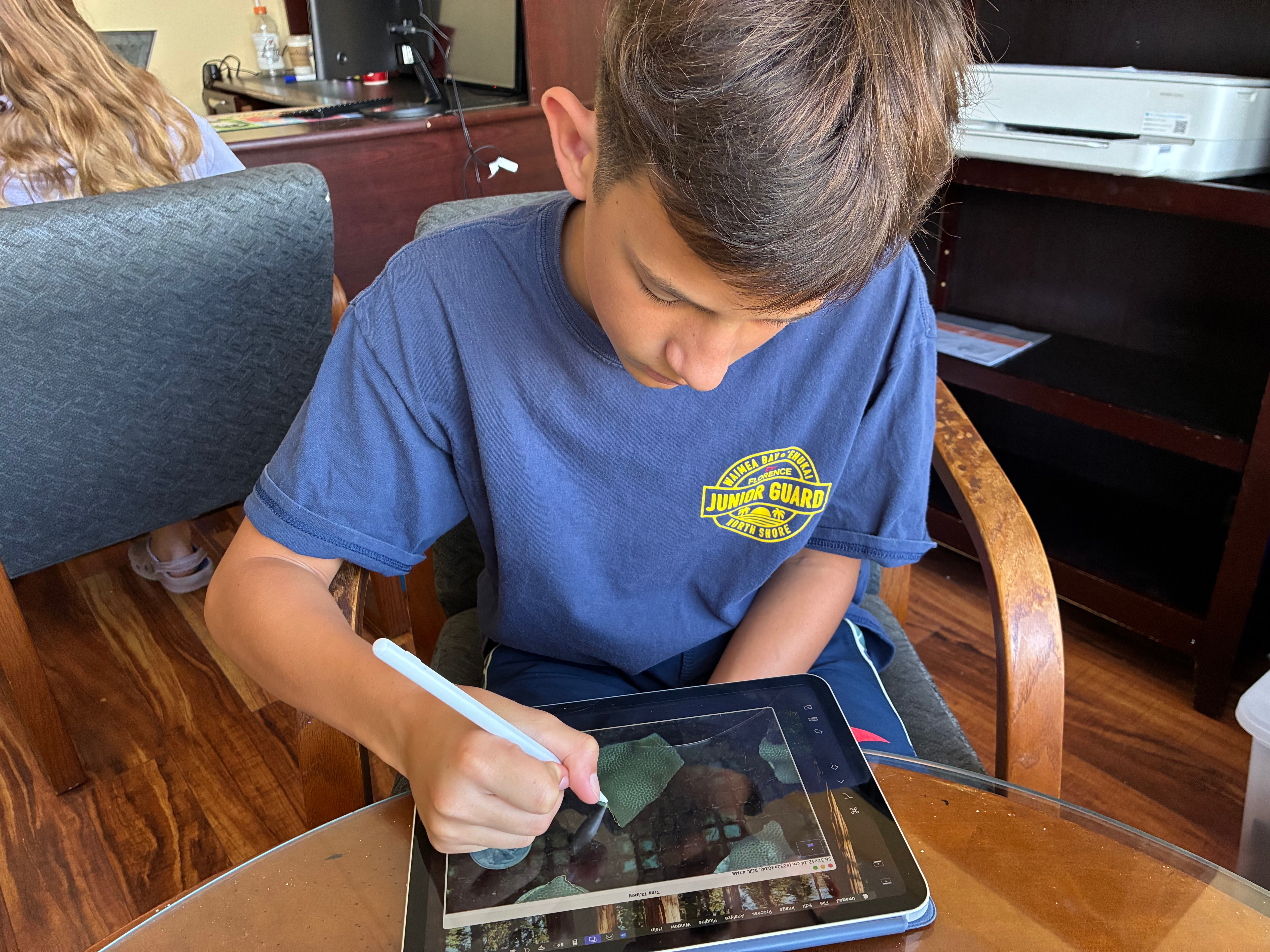
Digital Elevation Models (DEM’s) and 2D models were created and exported as a .tif file to Taglab. DEMs embed elevation information into the model with longitude and latitude to provide information about the models physical structure. This final model is the orthomosaic, which is done by creating and putting together orthophotos. Taglab usage is primarily to identify, outline, and annotate coral colonies. Each plot was scaled using scale bars to measure accuracies for referencing. We recorded coral surface area by drawing polygons around individual colonies and then labelling the colony with corresponding identification.
Writing and Presenting the Report
In their final week, our interns wrote up their report and presented it. They were able to record and analyse three individual photogrammetry surveys and learned that photogrammetry is a great tool for visualising and monitoring substrate composition, but can be tricky for identifying disease on corals, especially when the model comes out warped or unfocussed. This reinforced the importance of completing a good quality survey with plenty of overlap between photos and angling the camera to capture the sides of structures.
Not the End, Only the Beginning…
We are sad to be saying goodbye to this cohort of interns but are well aware that while their 6 Week Marine Research Internship has come to an end, it is only the beginning of their journey in the marine conservation space. We look forward to continuing our relationship with them and supporting them on their future endeavours.

How to Get Involved and Support Ocean Alliance Project
If you want to find out more about our internship opportunities, check out our upcoming programs:
- 1 Day Sea Turtle/ Coral Reef Conservationist Program: Learn More & Sign Up
- 4 Day Ecological Monitoring Program: Learn More & Sign Up
- 6 Week Marine Research Internship: Learn More & Sign Up
- 8 Week Scientific Divemaster Internship: Learn More & Sign Up
Or, if you’d like to support Ocean Alliance Project in other ways, consider donating or collaborating with us through the Get Involved section on our website.
Leave a Reply