


Why is Monitoring Coral Health Important?
A huge focus for Ocean Alliance Project (OAP) is monitoring coral health on the reefs of O’ahu. OAP have adopted the Ecological Monitoring Program (EMP) and photogrammetry methods to build long-term data sets that can show how our coral reefs change over time. For the third week of their Six Week Marine Research Internship, our interns have been learning coral taxonomy, types of coral diseases and how we monitor them using the EMP and photogrammetry.
What is Ocean Alliance Project?
OAP is a 501c(3) nonprofit organization based in on Oahu, Hawaii. Our goal is to protect and preserve the marine biodiversity of Oahu, Hawaii. We do this through community based monitoring and regenerative tourism programs, like the six week Marine Research Internship.
What is the Ecological Monitoring Program?
The ecological monitoring program is a key component of the Six Week Marine Research Internship offered by OAP. The ecological monitoring program is a global monitoring technique that was invented to standardise the way we collect data on our coral reefs. Therefore, by using a standardised technique, longterm data sets can be developed to paint a clear picture of how our reefs have changed over time. See our Ecological Monitoring Program blog post for more information on how this works.

Coral Taxonomy
O‘ahu’s coral reefs are home to a variety of coral species, each contributing to the island’s marine biodiversity. The dominant species include Porites lobata (Lobe Coral), recognized by its massive, dome-shaped colonies with smooth surfaces; Montipora capitata (Rice Coral), which forms branching structures with small, rice-like polyps; and Pocillopora meandrina (Cauliflower Coral), known for its compact, bushy appearance and wart-like protrusions. Porites compressa (Finger Coral) also thrives here, characterized by its thin, finger-like branches. Other coral genus often found around O’ahu include Pavona, Leptastrea and Fungia. These corals are primarily found in shallow, wave-exposed areas, playing a crucial role in providing habitat, protecting coastlines, and supporting marine life on O‘ahu. To see a comprehensive guide for corals found around the Hawaiian islands, see Eyes On The Reef Hawaii.


Monitoring Coral Health and Coral Disease on O’ahu
Coral diseases around O‘ahu primarily affect species like Porites compressa, Montipora capitata, and Pocillopora meandrina. Common diseases include Montipora White Syndrome, Porites White Syndrome, Pocillopora Tissue Loss Disease and Porites Trematodiasis. Coral disease outbreaks on the reefs of O’ahu were first documented in the early 2000s and have since spread due to environmental stressors like rising sea temperatures and pollution. Despite these observations, the understanding of coral diseases in Hawai‘i is still limited. Many diseases remain unidentified, and the exact mechanisms of their spread are poorly understood. To the untrained eye, it can be difficult to differentiate disease from predation and progressive bleaching caused by external stressors. Further research is needed to better understand these diseases and their impacts on coral reefs, which is why training interns on monitoring coral health is such an integral part of what we do here at Ocean Alliance Project.
“At first it was a little difficult to see which corals are diseased and which aren’t but the more we practice and see the corals on our dives, the easier it is to understand!” said Marine Research Intern Jayda.


Coral Disease Surveys
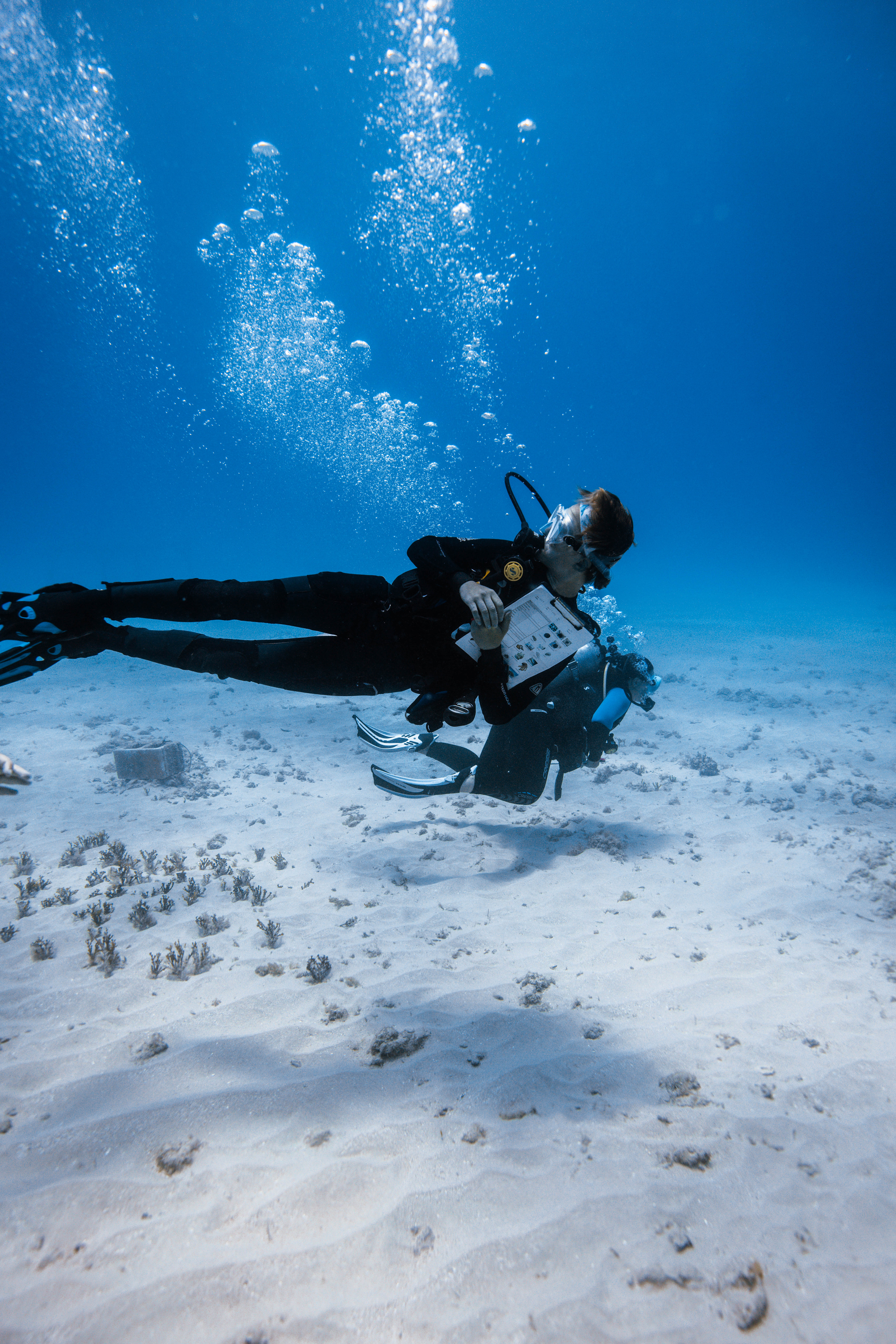
One aspect of the Ecological Monitoring Program is coral disease surveys. Our research interns swim along a 30x5m in buddy teams. The first team individually counts each coral colony by genera while the second team follows behind taking photos and recording counts of diseased coral. We can use these values to find the prevalence, incidence and mortality rate of the corals (see right).

An Introduction into Photogrammetry
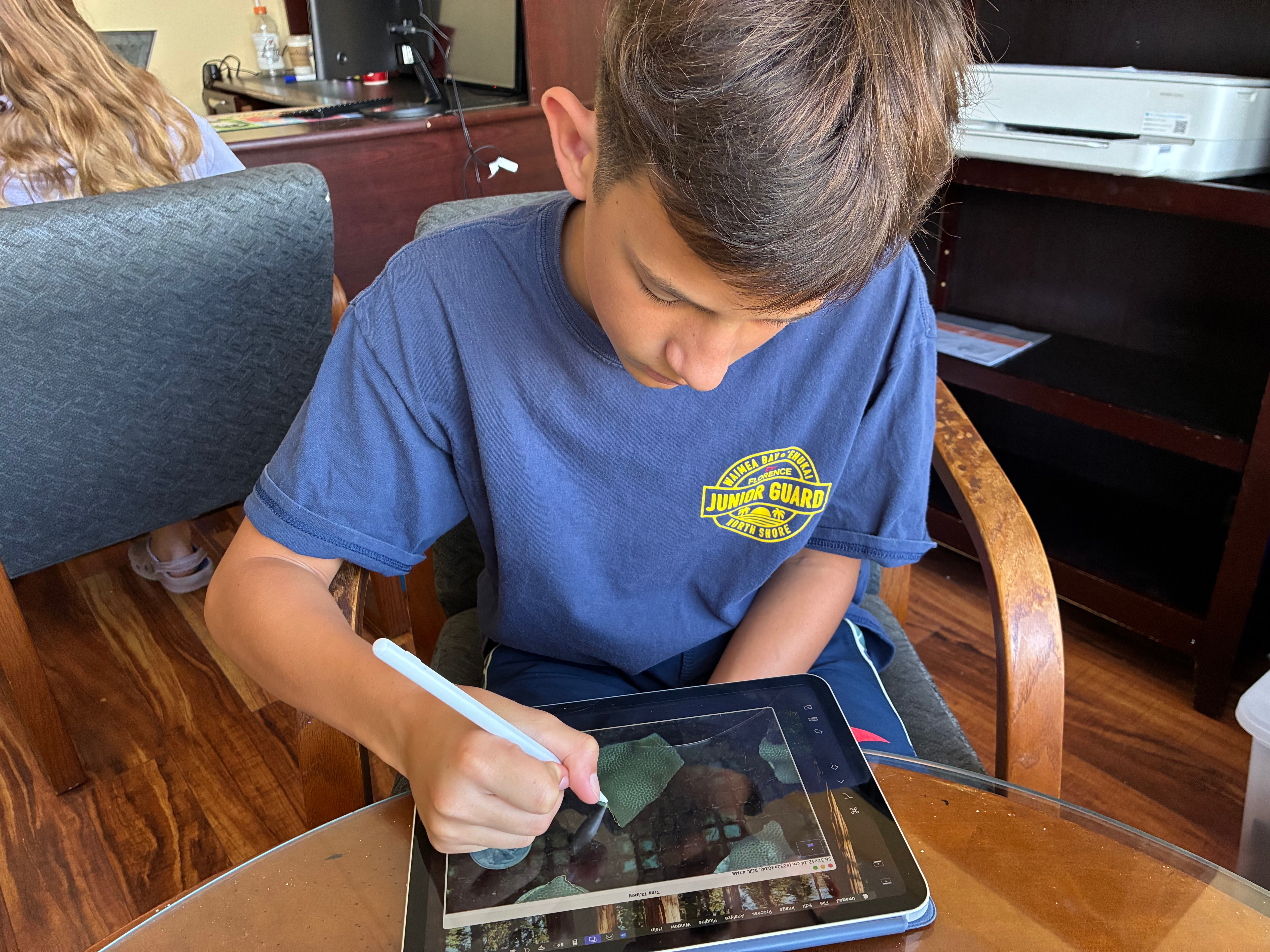
Photogrammetry is a technique that involves capturing and analyzing photographs to create accurate 3D models of objects, structures, or landscapes. By taking multiple overlapping images from different angles, software can reconstruct the subject’s dimensions and details with high precision. When monitoring coral health, Photogrammetry allows marine researchers to map coral reefs, track changes over time, and assess the impact of environmental stressors, offering a non-invasive way to gather detailed spatial information. The photogrammetry surveys we perform are 5x5m quadrats, a size that balances sufficient reef representation with orthomosaic rendering time. Our interns swim a u-pattern at 1m above the highest point of the reef within their quadrat, aiming for a minimum of 80% overlap with their photos to reduce warping in their orthomosaics.
“Doing photogrammetry during the dive was a little bit harder than I thought since there’s so many things you have to concentrate on, like buoyancy, depth, and making sure the camera gets all angles of the reef. However, I’m excited to get deeper into these topics for the next few weeks!” Jayda told us.
This week our interns each had a chance to practice doing photogrammetry surveys. Dive into next weeks blog to find out how we used our photogrammetry photos to create an orthomosaic and collect data on coral surface area using Coral.Net.
How to Get Involved and Support Ocean Alliance Project
If you want to find out more about our internship opportunities, check out our upcoming programs:
- 1 Day Sea Turtle/ Coral Reef Conservationist Program: Learn More & Sign Up
- 4 Day Ecological Monitoring Program: Learn More & Sign Up
- 6 Week Marine Research Internship: Learn More & Sign Up
- 8 Week Scientific Divemaster Internship: Learn More & Sign Up
Or, if you’d like to support Ocean Alliance Project in other ways, consider donating or collaborating with us through the Get Involved section on our website.
Leave a Reply